

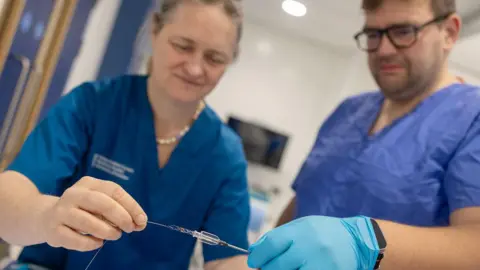
Doctors from the Scottish region and the United States have performed what is considered a pioneering brain operation using a robot.
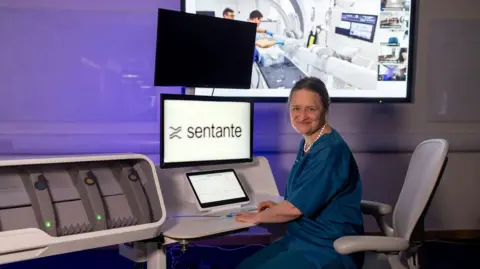
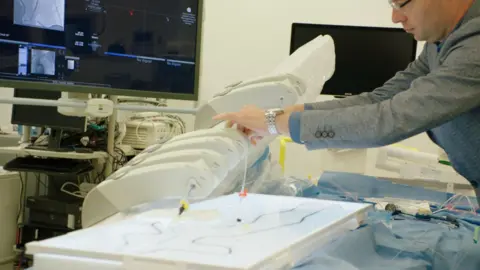
Prof Iris Grunwald, working at a medical institution, conducted the remote thrombectomy - the elimination of blood clots post a cerebral event - on a medical specimen that had been donated to medical science.
The expert was working from a treatment center in the location, while the body she was operating on with the system was separately situated at the research facility.
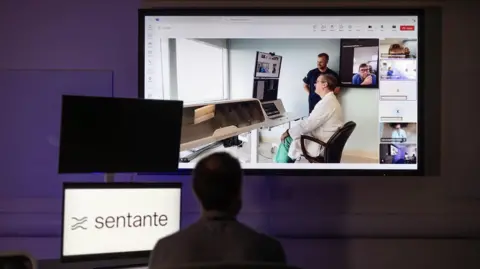
Subsequently, a medical specialist from Florida utilized the technology to perform the initial intercontinental procedure from his Jacksonville base on a human body in Dundee over 6,400km away.
The research collective has called it a potential "transformative advancement" if it receives authorization for clinical application.
The doctors think this innovation could change stroke care, as a delay in accessing specialist treatment can have a direct impact on the recovery prospects.
"The experience was we were seeing the initial vision of the future," stated the lead researcher.
"Where previously this was considered science fiction, we demonstrated that all stages of the operation can now be performed."
The University of Dundee is the worldwide teaching facility of the international stroke organization, and is the sole location in the Britain where doctors can operate on cadavers with actual blood pumped through the arteries to mimic treatment on a actual patient.
"This was the first time that we could perform the entire surgical process in a genuine medical subject to prove that every phase of the procedure are achievable," explained Prof Grunwald.
A charity executive, the director of a medical organization, described the transatlantic procedure as "a remarkable innovation".
"For too long, residents of isolated regions have been limited in obtaining to surgical intervention," she added.
"Robotics like this could correct the imbalance which persists in stroke treatment throughout Britain."
How does the system function?
An ischaemic stroke takes place when an vascular pathway is clogged by a clot.
This interrupts circulation and oxygenation to the neural matter, and neurons lose function and expire.
The superior intervention is a clot removal, where a surgeon uses catheters and wires to remove the clot.
But what occurs when a patient is unable to reach a expert who can perform the surgery?
Prof Grunwald explained the study showed a robot could be attached to the identical medical instruments a specialist would typically employ, and a healthcare professional who is present with the individual could simply attach the instruments.
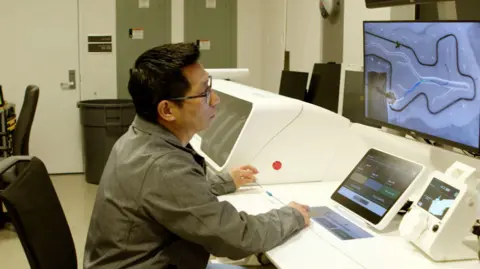
The specialist, in another location, could then manipulate and control their individual tools, and the mechanical device then carries out comparable motions in live timing on the patient to conduct the thrombectomy.
The subject would be in a medical facility, while the surgeon could carry out the surgery using the automated equipment from any location - even their personal residence.
The lead researcher and Ricardo Hanel could observe immediate scans of the subject in the studies, and track developments in real time, with the Scottish specialist stating it took merely twenty minutes of training.
Tech giants Nvidia and Ericsson were participated in the initiative to guarantee the network connection of the automated system.
"To conduct procedures from the US to Scotland with a brief latency - an instant - is truly remarkable," said the neurosurgeon.
Advancements in brain care
The lead researcher, who has received recognition for her contributions and is also the vice president of the World Federation for Interventional Stroke Treatment, explained there were two main problems with a conventional clot removal - a worldwide deficiency of specialists who can perform it, and treatment depends on your location.
In the region, there are merely three sites individuals can obtain the treatment - urban centers. If you aren't located nearby, you must travel.
"The treatment is highly dependent on timing," said Prof Grunwald.
"Every six minutes delay, you have a slightly decreased likelihood of having a positive result.
"This system would now deliver a innovative method where you're not depending on where you dwell - preserving the crucial moments where your brain is otherwise dying."
Healthcare information indicated there were {9,625 ischaemic strokes|numerous cerebral events|

